How to Pair Food with Bubbles
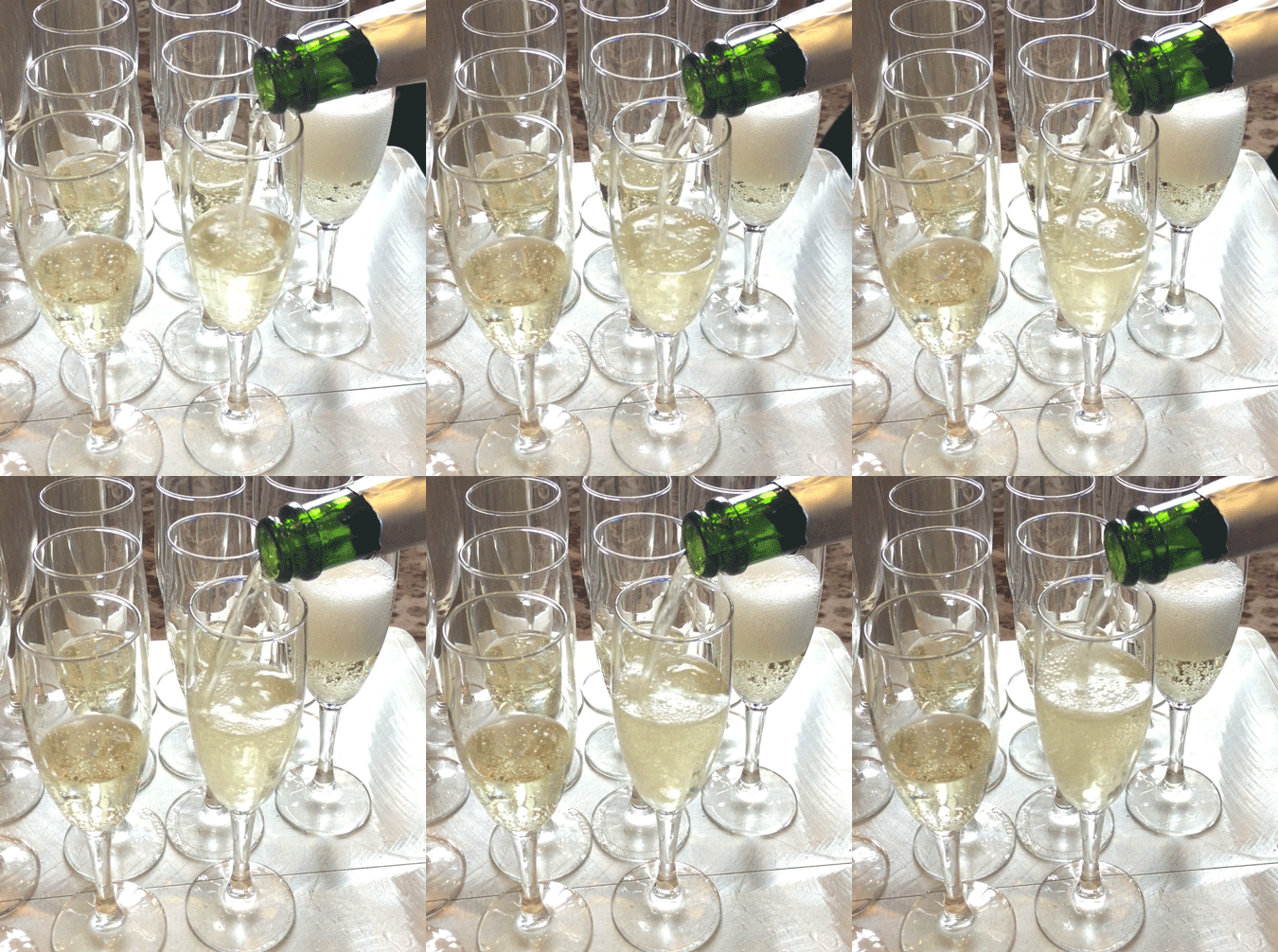
Whether it's ringing in the new year, toasting to a milestone, or celebrating an anniversary, bubbling drinks in a flute make it all the more special. In hospitality, bubbles used to mean champagne, which is a remarkably specific term. Champagne is a name-protected designation for sparkling wine made in Champagne, France. What sets it apart is the second fermentation in the bottle, referred to as méthode champenoise. As we've catered events over the years, we've found that our clientele enjoys a wide variety of bubbles beyond champagne, including cider, beer, and non-alcoholic options.
Read on to learn about our favorite kinds of bubbly drinks, how we serve, pair, and use them up to the last drop.
How to Serve Bubbles Well
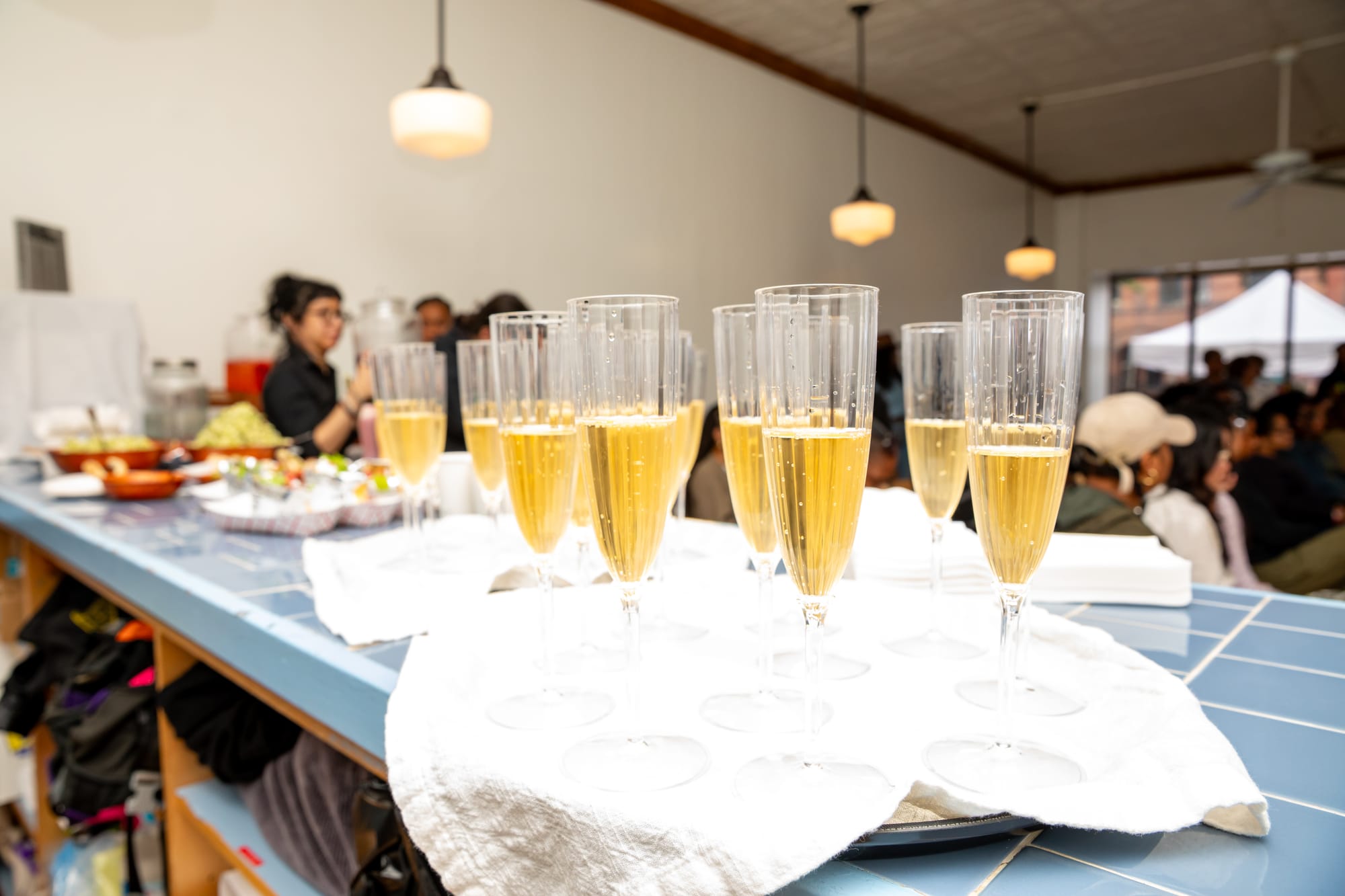
To preserve the refreshing quality and bubbles for serving, you need to chill your bottles for at least 30 minutes before opening and pouring. When you pop open a chilled bottle, the bubbles feel crisp when you drink. Warm bottles tend to overflow and feel almost sickening to the sip. Either lay it on its side in the fridge and make sure it doesn't roll around, or place it standing up. Do not store it in the refrigerator door. The motion of opening and closing the door can shake up the bottle (and give you a scare when you open it). Items in the door also experience temperature fluctuations more than those in the fridge's interior shelves.
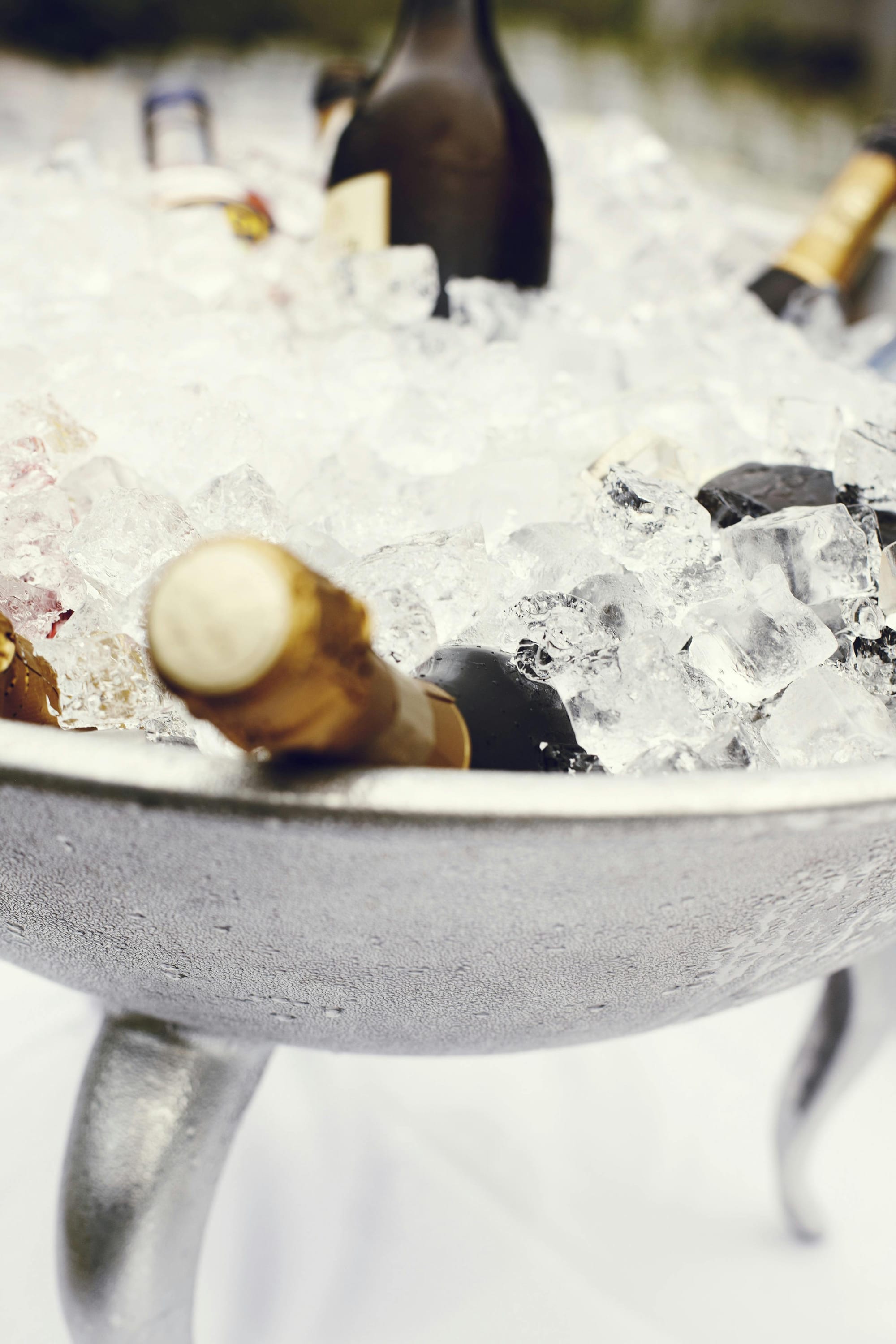
For the more theatrical host, invest in a wine bucket to chill your bottles. Place a dish towel or cloth napkin under the bucket to soak up any condensation, or place it on an outdoor table with slats. Fill the bucket halfway with ice water. Place your bottles in and top it off with more ice. If the bottle has been kept in the fridge or in a cool, dark place, then it will only take 30 minutes to chill in an ice bucket. However, if the bottle was at room temperature or in a warmer place, budget 1 1/2 to 2 hours for chilling and plan to change the ice (especially if it is hot out). Keep another dish towel nearby to dry the bottle whenever you need to open and pour it. After the bottles have been opened, keep them upright in the bucket or the ice tightly packed, so they don't spill.
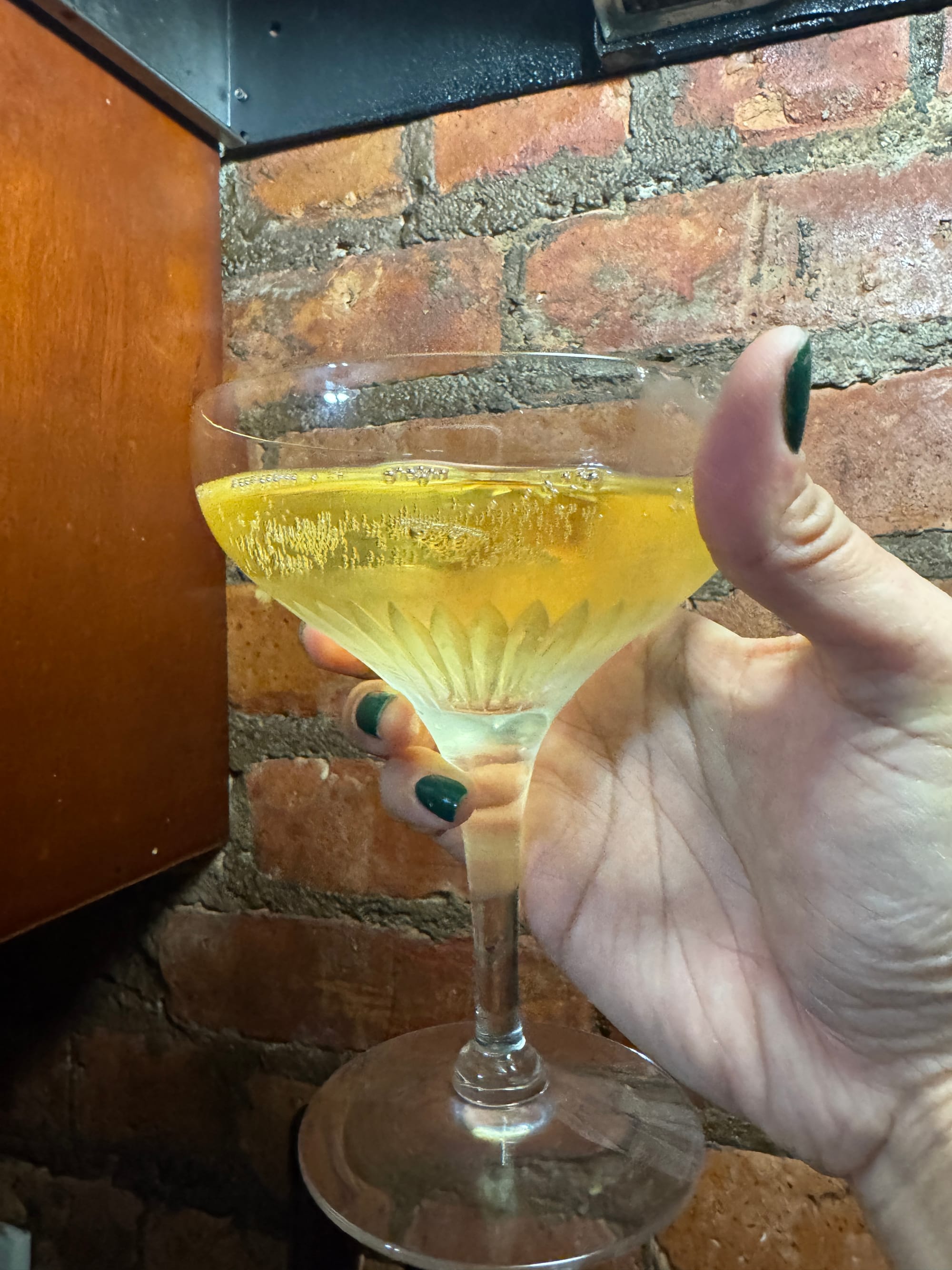
Your glassware should optimize the feeling of bubbles when you drink. The classic choice is a champagne flute. The narrow mouth is almost like a chute. Wider wine glasses give the drink more surface area for the bubbles to pop, resulting in a flatter experience over time. The glass that solves this issue is the coupe, while it is wide, its height is shorter to preserve the bubbles.
Our budget picks for outdoor celebrations are stemless glassware and disposables. We're fans of the short stemless glasses from Bormioli Rocco or these recycled cups, which we've found to be sturdier than stemware and stackable for storage. Nothing is worse than having to sweep up glass in the middle of a party. To prevent any glass breakage, eliminate glasses altogether and get stemless, compostable disposable wine cups.
How do you open champagne, sparkling wines, and anything with a pressurized cork? After the bottle has been chilled, grab the upper neck of the bottle with your non-dominant hand and place your thumb on top to prevent the cork from flying away. Unwind the metal cage with your other hand and carefully remove it. Using a dishcloth or napkin, place it over the cork and slowly twist it, making sure not to aim the bottle at anyone or your own face. When it feels like it is coming loose, continue to twist, but be ready for the cork to pop into your palm.
A note on sabering: It looks cool to slice a glass bottle open with a sword. But please, do not attempt to open bottles this way indoors without a trained professional present. We have witnessed multiple injuries from improper technique. Please hire a professional bartender with knowledge of sabering before trying it yourself.
The Bubbles We Love
What Champagne should you get? Depending on your budget and what you're going to eat, it's important to understand the sweetness levels in Champagne. Wine Enthusiast has an excellent chart to help with this:
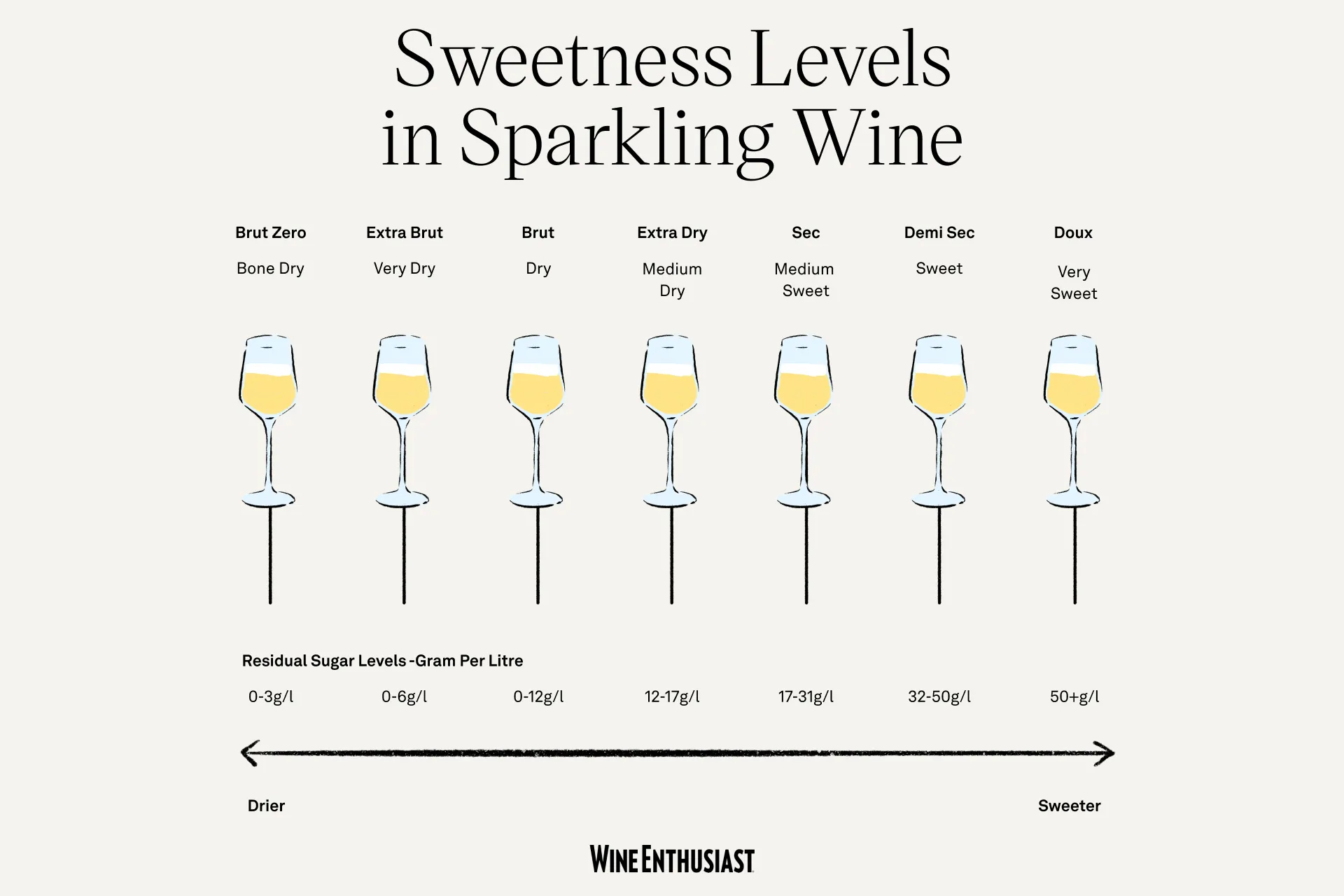
We gravitate toward brut and extra dry for pairing savory foods, but may skew toward sec and demi-sec if we're serving dessert or fruit. We understand that Champagne is a celebration drink, but it's often limited to 2-ounce pours for toasts because it can get expensive.
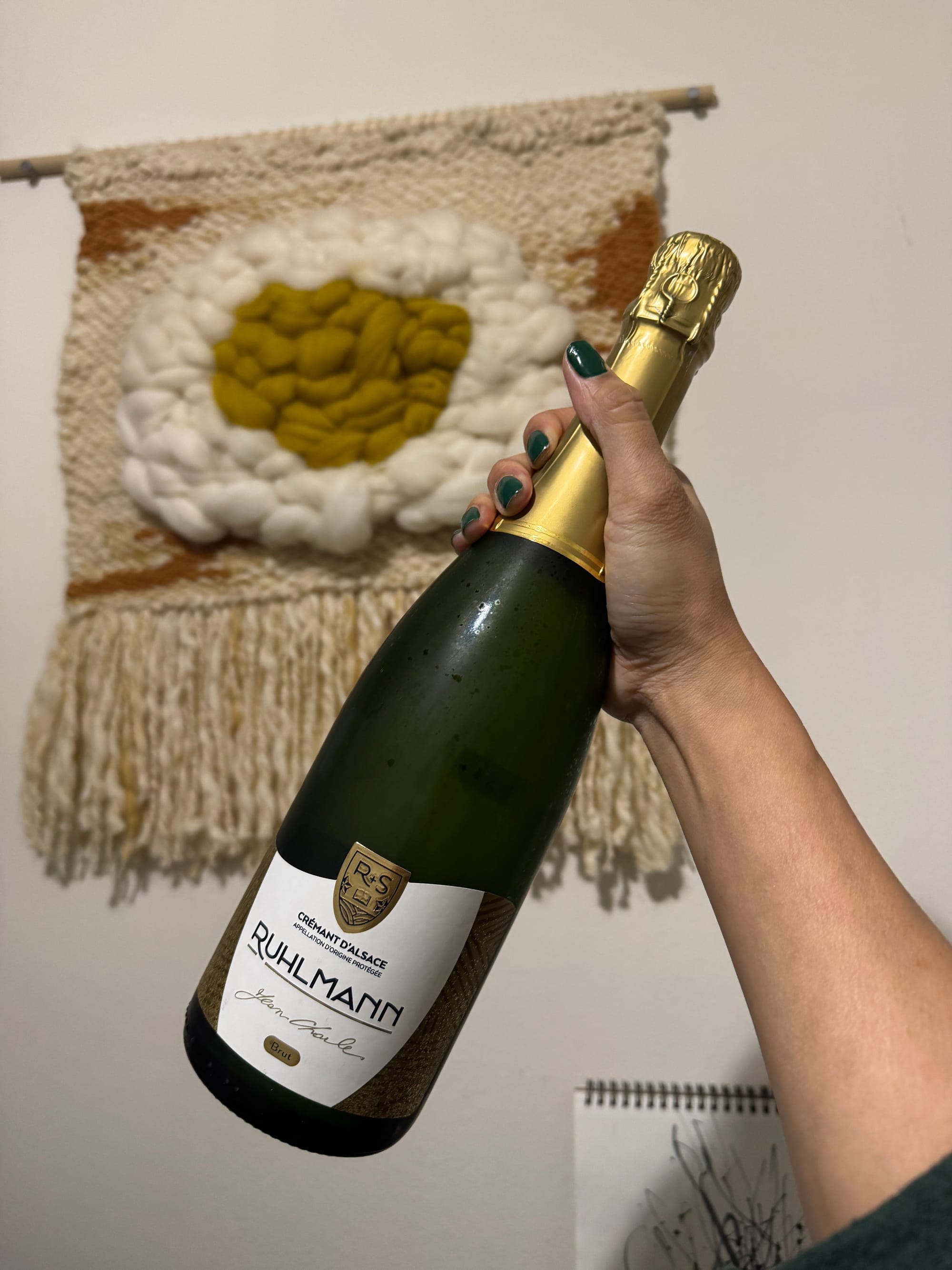
On the other hand, there are so many affordable sparkling wines available! We want to point you toward a few varieties we think are delicious with food. Generally, if you know you love a specific wine grape or region, there is most likely a corresponding sparkling wine.
- Cremants are the closest sparkling wines in method and recipe to Champagne; they are just made outside of the namesake region. We're partial to cremant d'Alsace blanc de blanc, which is made from white grapes and pairs well with caramelized onions, gruyere, and ham (the ingredients for Alsatian tarte flambe!).
- We're also fans of cavas, Spanish sparkling wines, that go well with jamon, green olives, and manchego.
- For lower budget celebrations, we recommend Vinho Verde, a Portuguese "green wine" style with a frizzante, or slight fizz.
- If you prefer reds, worry not, Lambruscos are for you. We particularly love them for brunch or afternoon gatherings.
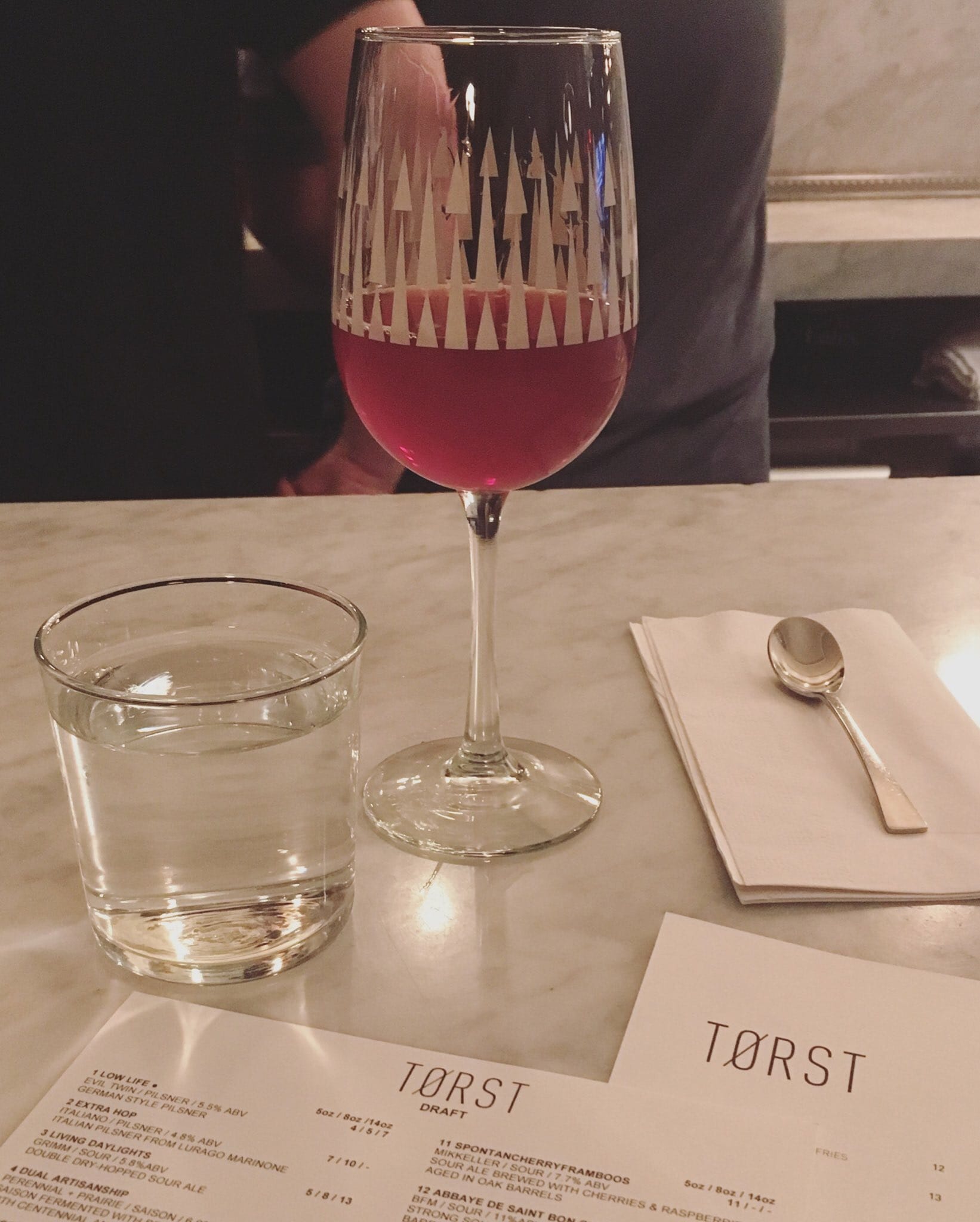
Do not count beer out of the running! Because the beer-making process is much faster than wine, there are quite a lot more options. It's totally cool to reach for the "champagne of beers," but if you're looking for something unique, look up your local brewery and see if they have any limited-edition runs available in a pony keg or in larger bottles. That way, you still preserve the ritual of "popping the bottle."
Fancy hard cider is a relatively new category we've come to love. Most are gluten-free and lower ABV than wines. We're fans of dry Basque and Asturian ciders. Traditionally, these ciders are poured from a height, above your head, and into a glass at waist level to promote the effervescence and bring out any subtle farmhouse notes. We recommend practicing with a bottle of water before trying it with the real stuff. American cider is popping up in every town, too. If you live near apple-growing areas, chances are you also have a cider house nearby.
Makgeolli is a Korean fermented rice wine. Its milk-like appearance is a lot like nigori, Japanese unfiltered sake. We love it because it is a low-abv option that you can drink in high volume. It pairs well with grilled foods, especially meat, and spicy foods. After chilling makgeolli, you need to reincorporate the rice sediment. Hold the bottle upside down and swirl it slowly until the liquid looks cloudy again, be careful not to shake it. Rather than glassware, the proper vessel for makgeolli is a little aluminum bowl or earthenware.
Nonalcoholic options are vast! We direct folks to Minus Moonshine, a Brooklyn-based non-alcoholic shop for the latest brands. We haven't tried everything out there yet, but we're drawn to companies like Proxies that make wine-like blends from scratch to enjoy with meals.
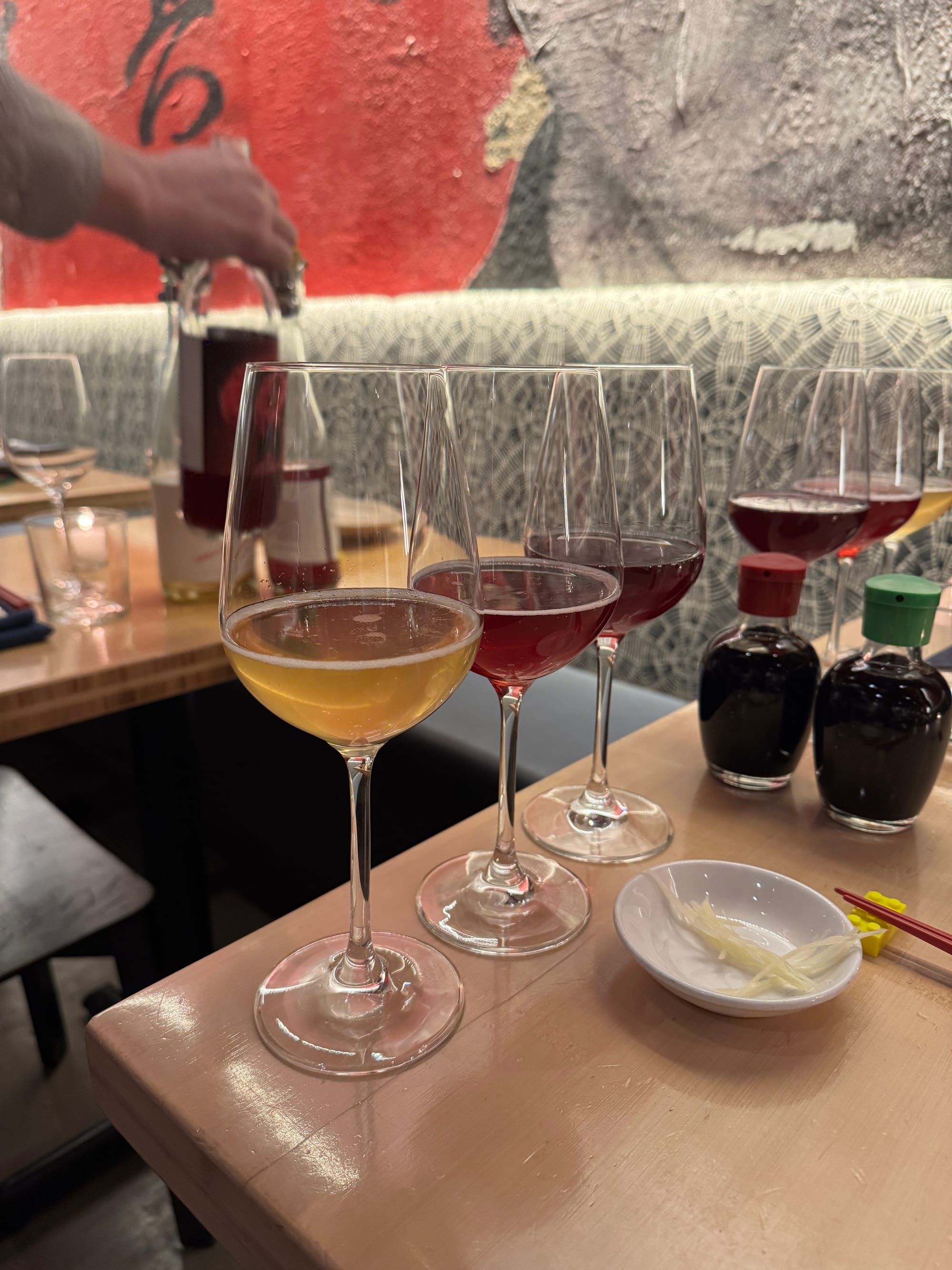
When you're stumped on what to buy or where to start, look at your favorite restaurant menus. Sommeliers thoughtfully pair wines and beverages with the food; their choices are intentional and spot on. One of our favorite somms is our friend Miguel de Leon over at Pinch Chinese. Their wine list is updated on a seasonal basis. When possible, order beverage flights to try as many types as possible.
The Best Garnishes
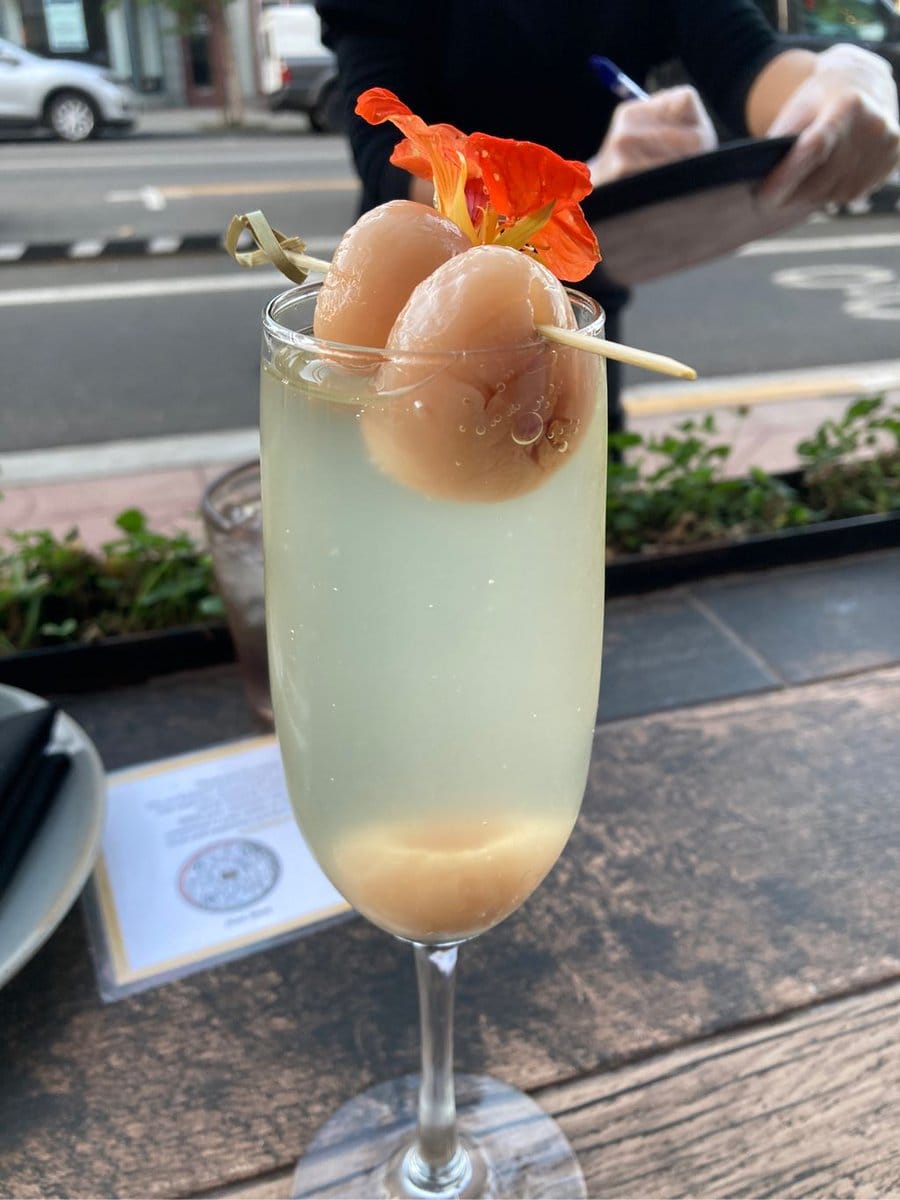
Step up a simple glass of bubbles and add a unique touch.
- Drop a ripe strawberry, cherry, peeled lychee, or a spoonful of pomegranate arils into every glass before pouring.
- A sprig of fresh mint, thyme, or rosemary looks lush and welcoming.
- You can also try edible flowers. Our favorites are bright orange marigolds and blue borage.
- Dressing up the glass can be as simple as a wide grapefruit peel, a lemon curl, or a halved calamansi.
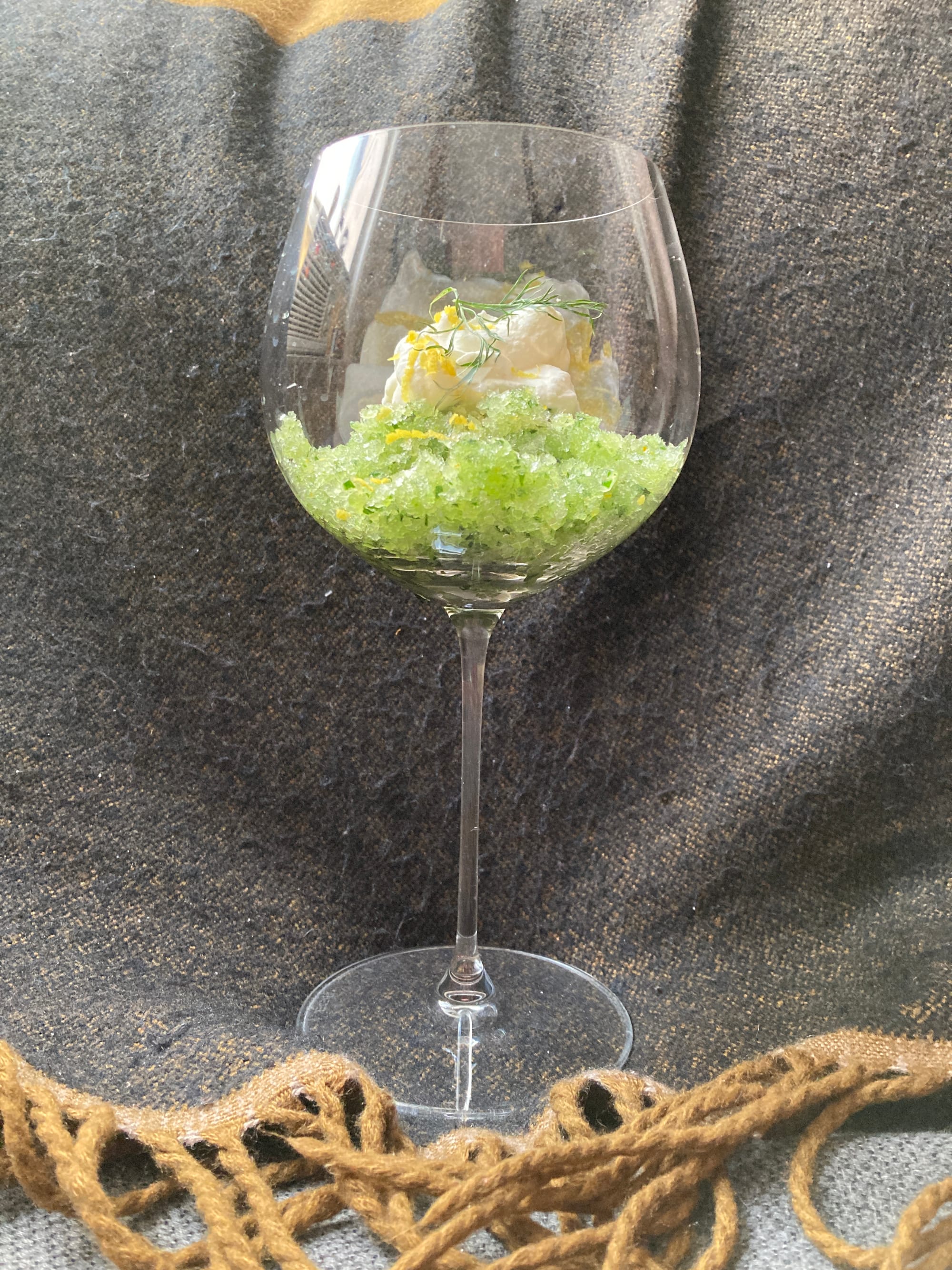
When it's hot out, we love a little sorbet float, granita, or a cut cube of a Melona ice cream bar in our cup.
We aren't fans of adding syrup to sweet sparkling wines, but it can be delicious with beer. Stouts and hefeweizens go well with chocolate syrup or raspberry syrup. Drizzle syrups along the interior of the glass and pour 3/4 of the way to let the foam rise and fall. Light beers are excellent with a little spike of Aperol or Campari during the summer.
The Best Cheeses
Our parties always have cheese. An amazing interaction happens when you have bubbly drinks with cheese. Because cheese has fat in it, it tends to stick to your tongue and teeth when you eat it. Bubbles help lift away fat, mixing with the cheese to make a cool third flavor when you swallow.
- Langres, a French washed rind cheese, was made for celebrations. You score an X on top and pour champagne into the divot to permeate the whole cheese. If you can't find it, an alternative is a Bavarian cheese called Red Casanova.
- Brillat Savarin is one of the fattiest triple creme cheeses out there. The outside looks like brie, but the interior paste is spreadable, soft, and creamy. If you can't find it, the more available cheeses are delice de Bourgogne, St. Andre, and Nettle Meadow Kunik.
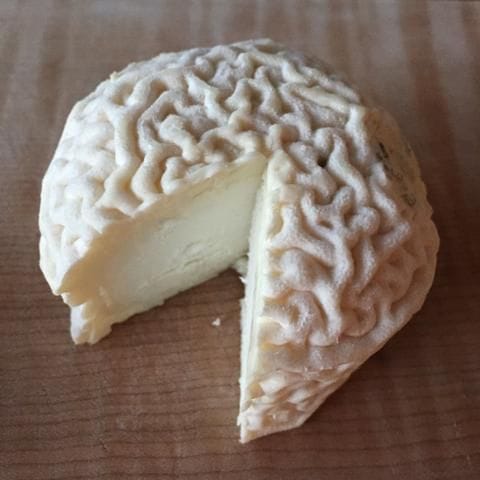
- Coupole is an aged soft goat cheese from Vermont Creamery. It's citrusy with a yogurt-like flavor, which goes well with dry sparkling wines and cider. Also from the same cheesemaker, Cremont is a smaller cheese with a blend of goat and cow's milk.
The Best Meats
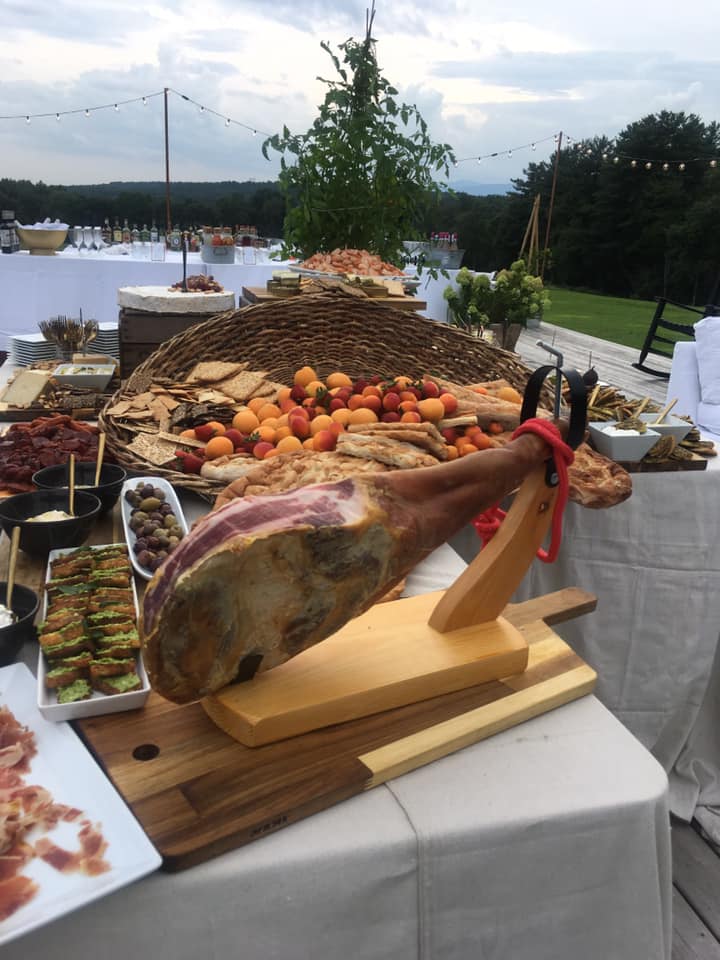
As we mentioned above, fat and bubbles go well together. We usually recommend charcuterie to pair with bubbles, but have since revised our list to include a few hot dishes.
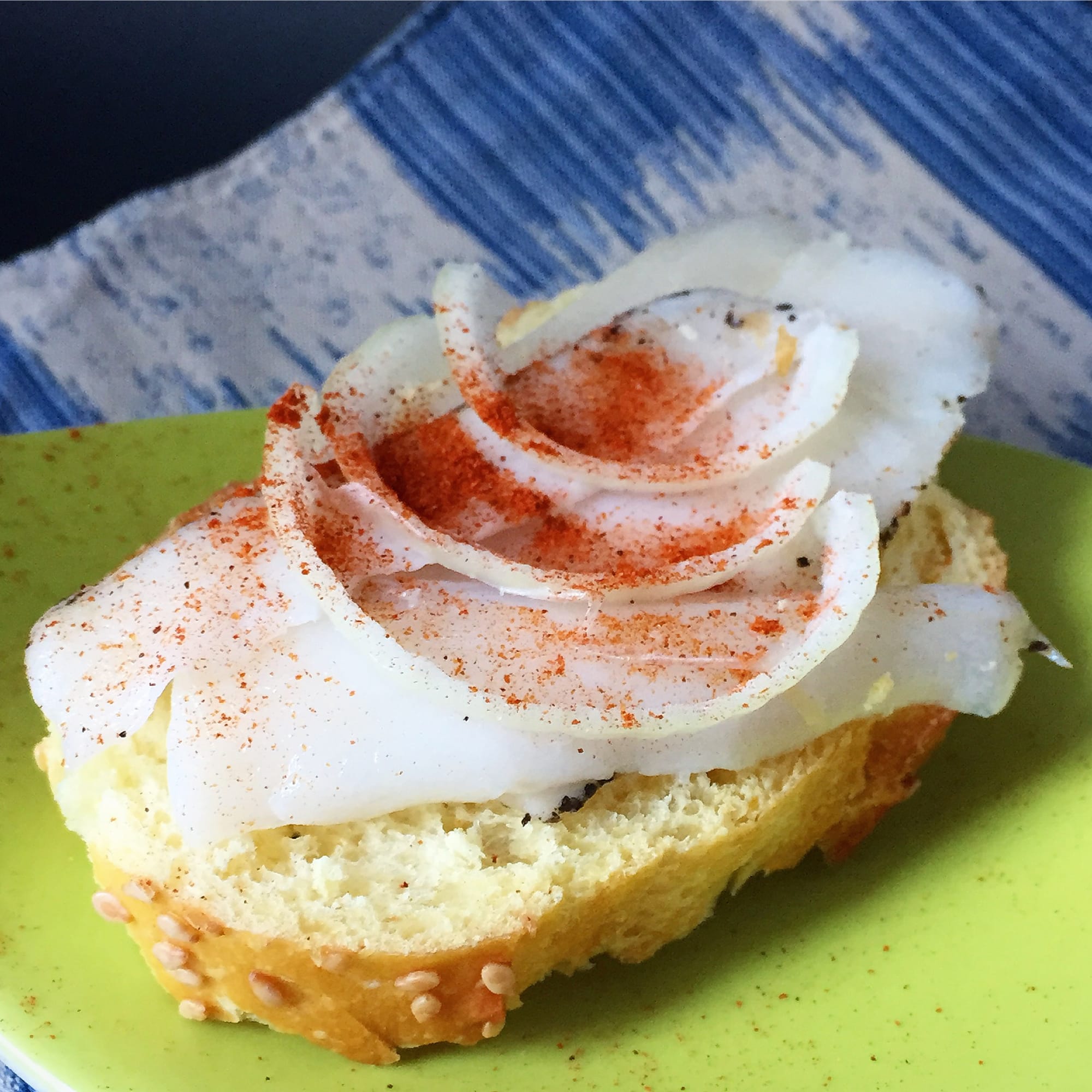
- Lardo is what it sounds like: it's fat! It's not just any fat; it is a type of salumi, cured pork backfat with rosemary and other spices. It's not the same as grocery store lard (which is for cooking). Lardo either comes in blocks covered in spices or sliced super thin. Let the lardo melt on your tongue a little before taking a sip.
- Jamon Iberico is a Spanish cured ham made from pigs that have eaten black acorns. It is sold pre-sliced or by the leg, which needs a stand and a special knife.
- Duck rillettes are like pate, a spreadable mixture of seasoned, shredded duck meat and duck fat. For the more adventurous, rabbit rillettes are also an option.
- Yakitori chicken skin and thigh meat hot off the grill are perfect for lighter beers and dry sparkling wines. These Japanese skewers are small and perfect for cocktail hour.
- Liempo is Filipino grilled pork belly, and lechon kawali is deep-fried pork belly. Both feature pork fat in different ways. The former is smoky, while the latter is crunchier.
- It's not exactly meat, but French fries fried in beef tallow are excellent with fizzy drinks. If you don't want to go through the trouble of frying, there are a few brands out there making beef tallow potato chips, too.
What To Do With Leftover Bubbles
The party's over. It's the next morning, and you've been left with a flat half bottle of bubbles. What should you do? Don't just pour it down the drain! Our favorite way to use up old sparkling wine, champagne, and beer is to cook with it. It can take the place of any white wine or sake when deglazing and braising.
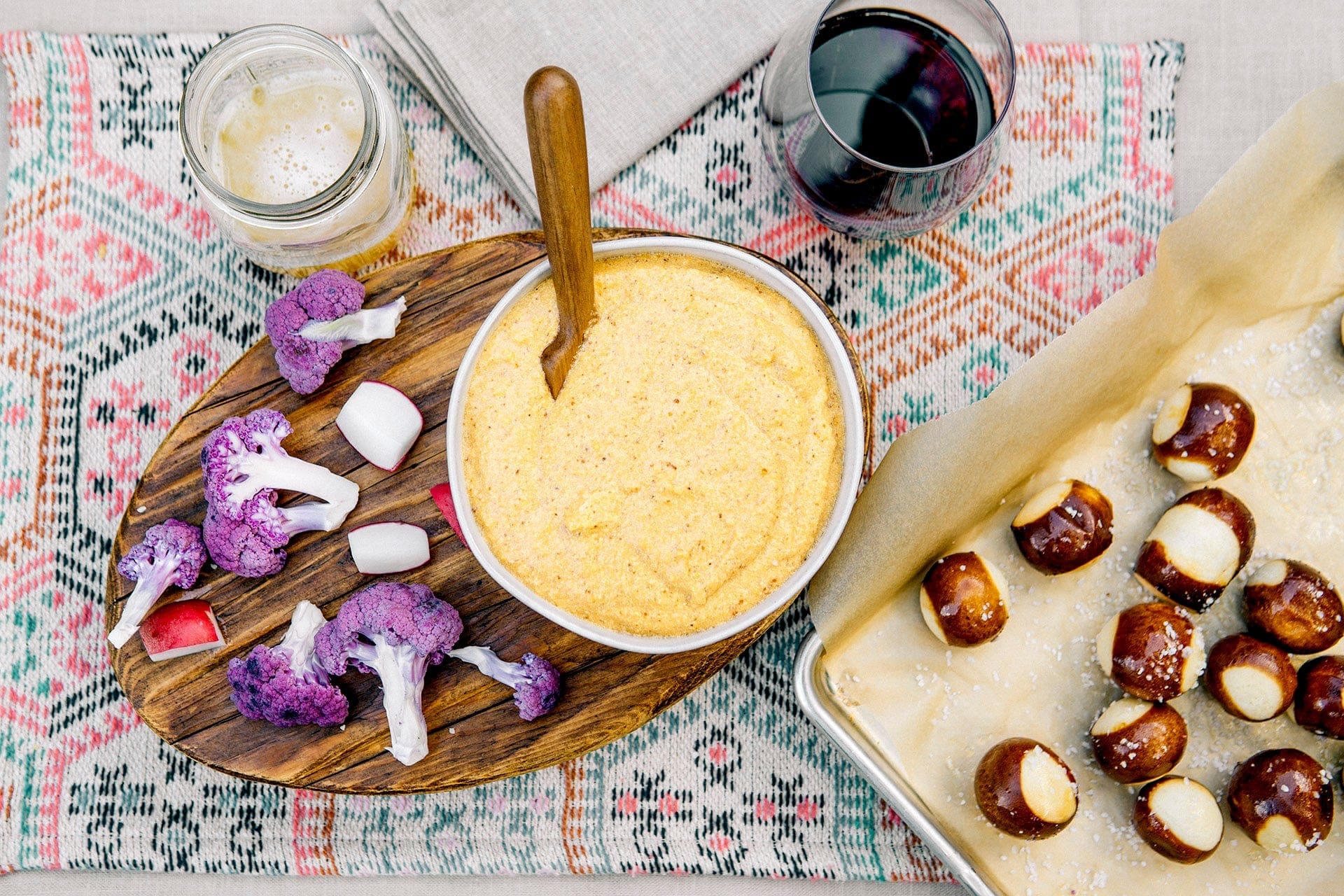
Another party trick is to blend it with leftover cheese to make fromage fort, a delightful cheese spread for crackers or toast. Remove the rinds from 1/2 pound of leftover cheeses (different kinds work, too) and blend with 1 clove of garlic and 1/4 cup leftover sparkling wine, champagne, or sparkling cider. We've also tried this with beer, cheddar, and mustard to make Kentucky beer cheese. You can find our recipe on Wine Enthusiast.
The Gift of Bubbles
If you're serving bubbles at your upcoming soiree, check out our Etsy recommendations for lovely champagne buckets, glassware, and fun gifts for the bubble-lover in your life. Here are our favorite items from the list.
- Need to transport your bottle to the function? This insulated bag is the perfect combination of fun and function.
- A tabletop discoball drink bucket brings the glam.
- Free up table real estate with a standing drink bucket.
- Swirly stemware is fun to hold while toasting with friends.
- As we said, pairing fatty foods with bubbles is the way to go, why not celebrate it with a hat?
No matter how you celebrate, we hope our tips help you enjoy your party deliciously. Cheers to that!
Disclosure: When you buy through our affiliate links, we may earn a commission. We have not been compensated otherwise for our recommendations.

Comments ()